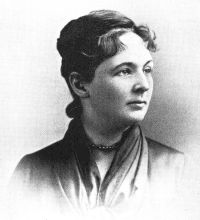
Margaret Wade Campbell Deland

Margaret Wade Campbell Deland

Summary

Portrait of Margaret Wade Campbell Deland Margaret Wade Campbell Deland Dr. Lavendar's People

Miss Harriet drew in her breath. "It's being trapped that is so awful, Willy. The consciousness that you can't get out. It isn't the—the pain of it; it's being trapped."
William King, looking at the poor tawny creature of the desert and free winds and life that dealt death with passion, blinked suddenly behind his glasses. "But you trap things yourself," he protested, a moment afterwards.
"Oh, but I don't keep 'em trapped; I kill 'em," she defended herself. "I couldn't keep things shut up. I'd be as bad as Annie if I saw any living creature that wasn't free to get out-of-doors."
Source: Gutenberg

Portrait of Margaret Wade Campbell Deland Margaret Wade Campbell Deland Dr. Lavendar's People

We should not have been "poor things!" This was very confusing to Old Chester youth until we grew older and understood. Then, instead of being puzzled, we shrunk a little and stayed close to our mothers, listening to Miss Harriet's stories of Miss Annie with strange interest and repulsion, or staring furtively at the little old woman, who laughed often and had a way of running about like a girl, and of smoothing back her gray hair from her temples with a fluttering gesture, and of putting up her lip and crying when she was angry or frightened or when she saw anything being hurt.
Source: Gutenberg

Portrait of Margaret Wade Campbell Deland Margaret Wade Campbell Deland Dr. Lavendar's People

It was very unlike Milly's dresses—dark, good woollens, made rather tight, for Milly, short and stout and forty-three, aspired (for her Thomas's sake) to a figure,—which is always a pity at forty-three. Furthermore, Helen Hayes's hands, very white and heavy with shining rings, lay in lovely idleness in her lap; and that is so much more restful in a woman's hands than to be fussing with sewing "or everlasting darning," Thomas thought. In fact, what with her lovely idleness and her praise of his boy, Tom Dilworth thought he had rarely seen so pleasing a young woman.
Source: Gutenberg

Get perspective with Kwize: daily news enlightened by great literature