Summary

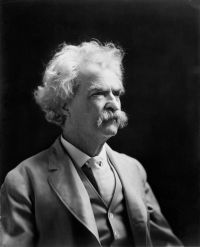
Portrait of Mark Twain Mark Twain Life on the Mississippi — Appendix A (1883)

One does not appreciate the sight of earth until he has traveled through a flood. At sea one does not expect or look for it, but here, with fluttering leaves, shadowy forest aisles, house-tops barely visible, it is expected. In fact a grave-yard, if the mounds were above water, would be appreciated. The river here is known only because there is an opening in the trees, and that is all. It is in width, from Fort Adams on the left bank of the Mississippi to the bank of Rapides Parish, a distance of about sixty miles.
Source: Wikisource

Portrait of Mark Twain Mark Twain Life on the Mississippi — Appendix A (1883)

One man, whom your correspondent spoke to, said that he had had one hundred and fifty head of cattle and one hundred head of hogs. At the first appearance of water he had started to drive them to the high lands of Avoyelles, thirty-five miles off, but he lost fifty head of the beef cattle and sixty hogs. Black River is quite picturesque, even if its shores are under water. A dense growth of ash, oak, gum, and hickory make the shores almost impenetrable, and where one can get a view down some avenue in the trees, only the dim outlines of distant trunks can be barely distinguished in the gloom.
Source: Wikisource

Get perspective with Kwize: daily news enlightened by great literature