Summary

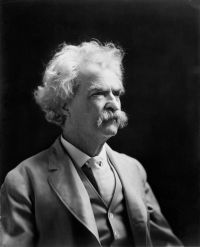
Portrait of Mark Twain Mark Twain Life on the Mississippi — Chapter 19 (1883)

The racket had brought everybody to the hurricane deck, and I trembled when I saw the old captain looking up from the midst of the crowd. I said to myself, 'Now I AM done for!'--For although, as a rule, he was so fatherly and indulgent toward the boat's family, and so patient of minor shortcomings, he could be stern enough when the fault was worth it.
I tried to imagine what he WOULD do to a cub pilot who had been guilty of such a crime as mine, committed on a boat guard-deep with costly freight and alive with passengers. Our watch was nearly ended.
Source: Wikisource

Portrait of Mark Twain Mark Twain Life on the Mississippi — Chapter 19 (1883)

During the brief remainder of the trip, I knew how an emancipated slave feels; for I was an emancipated slave myself. While we lay at landings, I listened to George Ealer's flute; or to his readings from his two bibles, that is to say, Goldsmith and Shakespeare; or I played chess with him--and would have beaten him sometimes, only he always took back his last move and ran the game out differently.
Source: Wikisource

Portrait of Mark Twain Mark Twain Life on the Mississippi — Chapter 19 (1883)

Brown was steering; I was 'pulling down.' My younger brother appeared on the hurricane deck, and shouted to Brown to stop at some landing or other a mile or so below. Brown gave no intimation that he had heard anything. But that was his way: he never condescended to take notice of an under clerk. The wind was blowing; Brown was deaf (although he always pretended he wasn't) , and I very much doubted if he had heard the order.
Source: Wikisource

Get perspective with Kwize: daily news enlightened by great literature