Summary

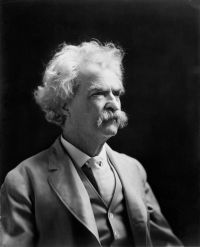
Portrait of Mark Twain Mark Twain,  Life on the Mississippi — Chapter 49 (1883)

“ Doubtless they chose farming because that life is private and secluded from irruptions of undesirable strangers--like the pilot-house hermitage. And doubtless they also chose it because on a thousand nights of black storm and danger they had noted the twinkling lights of solitary farm-houses, as the boat swung by, and pictured to themselves the serenity and security and coziness of such refuges at such times, and so had by-and-bye come to dream of that retired and peaceful life as the one desirable thing to long for, anticipate, earn, and at last enjoy. ”
Source: Wikisource

Portrait of Mark Twain Mark Twain,  Life on the Mississippi — Chapter 49 (1883)

“ But I did not learn that any of these pilot-farmers had astonished anybody with their successes. Their farms do not support them: they support their farms. The pilot-farmer disappears from the river annually, about the breaking of spring, and is seen no more till next frost. Then he appears again, in damaged homespun, combs the hayseed out of his hair, and takes a pilot-house berth for the winter. In this way he pays the debts which his farming has achieved during the agricultural season. ”
Source: Wikisource

Portrait of Mark Twain Mark Twain,  Life on the Mississippi — Chapter 49 (1883)

“ Captain Montgomery, whom I had steered for when he was a pilot, commanded the Confederate fleet in the great battle before Memphis; when his vessel went down, he swam ashore, fought his way through a squad of soldiers, and made a gallant and narrow escape. He was always a cool man; nothing could disturb his serenity. Once when he was captain of the 'Crescent City,' I was bringing the boat into port at New Orleans, and momently expecting orders from the hurricane deck, but received none. ”
Source: Wikisource

Get perspective with Kwize: daily news enlightened by great literature