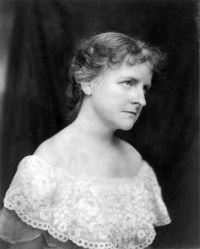
Mary E. Wilkins Freeman

Mary E. Wilkins Freeman

Summary

Portrait of Mary E. Wilkins Freeman Mary E. Wilkins Freeman The Lost Dog (1900)

His mistress's carriage was waiting, and he beside it, one day in spring when they were selling daffodils and violets on the street, and doves were murmuring around the church towers, and the sparrows clamorous, and everything which had life, in which hope was not quite dead, was flying, and darting, and blossoming, and creeping out into the sunlight.
Source: Wikisource

Portrait of Mary E. Wilkins Freeman Mary E. Wilkins Freeman The Lost Dog (1900)

Finally the dog fastened his despairing eyes upon a man coming around the corner, and he followed him. He knew he was not his master, but there was that about him which awakened that wisdom of dependence which had come down to him through generations. He knew that here was a man who could love a dog.
Source: Wikisource

Portrait of Mary E. Wilkins Freeman Mary E. Wilkins Freeman The Lost Dog (1900)

But all at once he stopped, his tail dropped between his legs, and he skulked away from the false track in an agony of mortification and despair. It had ended abruptly at a street corner, where the man had taken a carriage. He doubled and went back for his life to the last place where he had seen his master in the morning. It was a crowded corner, and the people were passing and repassing, weaving in and out, a great concourse of humanity following the wonderful maze of their own purposes.
The dog sniffed at the heels of one and another. He followed and retreated; he dodged and skulked.
Source: Wikisource

Get perspective with Kwize: daily news enlightened by great literature