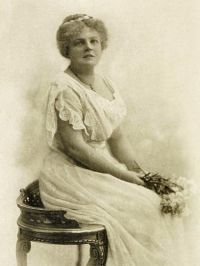
Mary Gaunt

Mary Gaunt

Summary

Portrait of Mary Gaunt Mary Gaunt The Moving Finger — Lost (1895)

If ever poor beasts were done, were at their last gasp, they were, as they stood there, their noses touching the ground. The bushman's slender equipment had been reduced to its scantiest proportions, and yet it seemed cruelty to force them to carry even those slender packs; even the canvas water-bags, dry as tinder now, hanging at their necks, were a heavy burden. Wiser than their masters they had crawled beneath the shade, scanty as it was, of the boxwood trees, and stood there patiently waiting—For what? For death and the pitiless crows patiently waiting overhead.
Source: Wikisource

Portrait of Mary Gaunt Mary Gaunt The Moving Finger — Lost (1895)

An hour or two, and the moon rose, a full moon, red and fiery, and as she rose slowly to the zenith, silvering as she rose, the plain grew light as day. Every little stick and stone, every little grass blade, was clearly outlined, the low ridge which they were leaving behind, the ridge where they had found their worst fears realized, loomed large behind them, while the salt-pan to their left stretched away one great lake of glittering white, which it seemed to Helm they could never round.
Source: Wikisource

Portrait of Mary Gaunt Mary Gaunt The Moving Finger — Lost (1895)

It was a dreary, hopeless waking, the salt lake was behind them now, and all around was the plain, bare hard earth in some places, patches of grass in others, not a living thing visible, even the crows had gone, and, though the foul birds had filled Helm with a shrinking horror, their absence was still more terrible, for did it not show that they were plunging farther and farther into the desert, farther and farther from the water without which they could not live out another day.
Source: Wikisource

Get perspective with Kwize: daily news enlightened by great literature