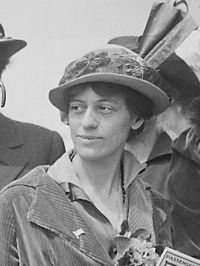
Mary Heaton Vorse

Mary Heaton Vorse

Milorad (1920)

Summary

Portrait of Mary Heaton Vorse Mary Heaton Vorse Milorad (1920)

Then I went out, down through the main street of Uskub.
There were shops where Albanians sold curded milk; shops with round Turkish bread, Greeks selling sweets that looked like poison—candy of bright green, candy of cerise. Yet the Turkish children eat them without dying. And farther, threading the crowd, are the closely veiled Turkish women, swathed in black robes; red-fezed bootblacks clamored impudently; donkeys and buffalo-carts, and the Jugo-Slav soldiers—volunteers from America—in their neat-blue uniforms.
Source: Wikisource

Portrait of Mary Heaton Vorse Mary Heaton Vorse Milorad (1920)

He is safe; he does not walk the highways of the earth, nor sleep in ditches. He is not chased, hungry, from door to door. The woman from Mladnavo is good to him—but she is not his mother. Once by chance he encountered her; he knew her, he loved her; and for a happy moment our love flowed together. But when I look out over the implacable silence that divides us, I wonder if it would not have been better if we had not met. At night when I tuck my children in—my children, so safe, so secure—my children who have never had to weep for me, I wonder where you are, Milorad.
Source: Wikisource

Portrait of Mary Heaton Vorse Mary Heaton Vorse Milorad (1920)

Then we went along, Milorad repeating to himself, over and over, my first name, which was all he could remember, and then, "Sestra—sestra—sestra," like a song, the most caressing song in the world. It came from the center of the heart of love. He was singing it to me, so unconscious that he didn't even know that his happy lips were busy with this song of his. Some time I listened to him, while the spectacle of Uskub—its soldiers, its beggars, its Albanians, and Turks—flowed before my eyes, as though hastening to some incredible masquerade.
Source: Wikisource

Get perspective with Kwize: daily news enlightened by great literature