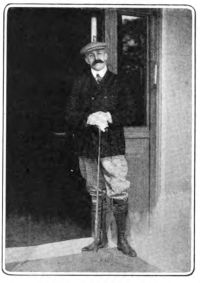
Max Pemberton

Max Pemberton

Summary

Portrait of Max Pemberton Max Pemberton Barbara of the Bell House (1899)

With this word he condescended to get up and help me to moor the punt at the foot of the great oak which stands sentinel to the Bell House When we had made all straight, and had lighted our pipes, we landed at the rotting stage and crossed the ragged lawn toward the long windows of the lower storey. Dreary as the aspect was from the river, a closer acquaintance with the deserted building seemed veritably to chill the heart. It was as if all the trees about moaned a dirge for the dead hopes of the man who had lived and wrecked his life beneath their shade.
Source: Wikisource

Portrait of Max Pemberton Max Pemberton Barbara of the Bell House (1899)

Life and death—the river chants of both the song of noon -day, the dirge of the ultimate night.
Hut these are the thoughts of summer, and it is different when autumn gives a golden red to the leaves, and the mists rise almost as the sun sets. There is the sweetness in the morning air, indeed; but the nights are nights of damp and fog and deadly chill, no less to be dreaded because the moon gives the fullness of her light and the sheaves stand sentinels in the well-gleaned fields.
Source: Wikisource

Portrait of Max Pemberton Max Pemberton Barbara of the Bell House (1899)

No tramp seeking a night's lodging would carry a lantern in his hand. No pilferer would be moved to steal bricks and tumbling plaster. Yet there was the light now shining from the hall—now disappearing, now flashing—not from any window above, but up, as it were, from the very bowels of the earth. Then only I had a theory—the night-walker was one with business in the cellars of the Bell House.
Source: Wikisource

Get perspective with Kwize: daily news enlightened by great literature