Summary

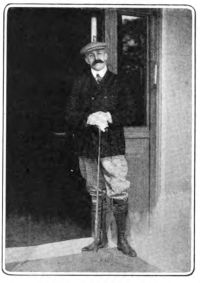
Portrait of Max Pemberton Max Pemberton Signors of the Night — A Sermon for Clowns (1899)

Old Giacomo crossed himself devoutly.
"My master," he exclaimed, "we are bewitched. A woman stood at the altar this morning and she had the evil eye. That is why I see you in the square down yonder, when in reality you are at supper in this room. And look—you sit upon a golden chair, there is a fool's cap on your head, you have a flagon in your hand, a woman—that I should say it—a woman sits upon your knee—oh, excellency, was ever such a thing heard of since the blessed saint came to Venice."
But it was Scavezzo's turn to be deaf now.
Source: Wikisource

Portrait of Max Pemberton Max Pemberton Signors of the Night — A Sermon for Clowns (1899)

Giacomo's eyes twinkled.
"You must ask Frà Giovanni about that," he said; "perchance old Barbarino has a bad memory, excellency—a clown's way of speaking, you understand, which implied, as I live, that you should preach to clowns."
Scavezzo sighed.
"It is a long way to Rome, Giacomo," he expostulated; "nevertheless——"
"Nevertheless, Venice has a longer memory, my master. The city loves her clowns—ay, better than any Canon that ever wore the purple."
Source: Wikisource

Portrait of Max Pemberton Max Pemberton Signors of the Night — A Sermon for Clowns (1899)

A SERMON FOR CLOWNS I. On the morning of the feast of the Ascension, in the year 1702, Scavezzo, the fat Canon of St. Mark's, stood before the booth of old Barbarino, the clown, and rated its owner soundly.
"What!" he cried; "to mock a Canon of the Ducal House, to hold him up to the ridicule of the people, to ape his sermons and his gestures. Out on you for a rogue who shall be whipped before dawn to-morrow!"
It was obvious to the densest person that the good churchman was exceedingly angry.
Source: Wikisource

Get perspective with Kwize: daily news enlightened by great literature