“ At this moment the Krooman, by a gesture, called their attention towards the captive sheik, at the same time giving utterance to a sharp ejaculation."Look!" exclaimed he, "Golah no stay longer on de Saära. You him see soon die now—look at him!"At the same instant Golah had risen to his feet, inviting his Arab master to a conference."There is but one God," said he, "Mahomet is his prophet; and I am his servant. I will never be a slave. Give me one wife, a camel, and my scimitar, and I will go. I have been robbed; but God is great, and it is his will, and my destiny." ”
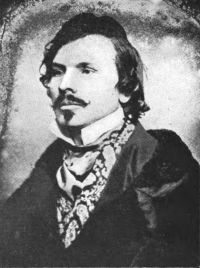
Mayne Reid
Summary
Mayne Reid’s The Boy Slaves is a 19th-century adventure novel centered on a group of young protagonists—Colin, Terence, and Bill—captured by Arab slavers and thrust into the perilous Saharan desert. Set against the backdrop of harsh landscapes, thirst, and the oppressive hierarchy of slavery, the narrative follows their struggle for survival and resistance against bondage, embodied in the defiant character of Golah, a captured sheik who refuses submission.
Themes of desert endurance, cultural conflict, and the moral complexities of captivity are woven through vivid depictions of sandstorms, camel caravans, and encounters with desert tribes. The novel’s tension between human resilience and the unforgiving environment culminates in a portrayal of freedom as both a personal and collective aspiration.
Quotes from The Boy Slaves (Mayne Reid)
“ When the camel and its rider first loomed in sight, indistinctly seen under the shadow of the sand-dunes, our adventurers had conceived a faint hope that it might be Sailor Bill.It was possible, they thought, that the old man-o’-war’s-man, left unguarded in the camp, might have laid hands on the maherry that had made away with him, and pressed it into service to assist his escape.The hope was entertained only for a instant. Bill had encountered no such golden opportunity, but was still a prisoner in the tent of the black sheik, surrounded by his shrewish tormentors. ”
“ Amidst these shouts was heard,—in the direction from which the sailor had fled,—a loud voice frantically calling, "Muley! Muley!""'Tis the voice of Golah!" exclaimed the Krooman in Arabic. "He is calling for his son,—Muley is his son's name!""They are going to attack the douar," shouted the Arab sheik, and his words were followed by a scene of the wildest terror.The Arabs rushed here and there, mingling their cries with those of the slaves; while women shrieked, children screamed, dogs barked, horses neighed, and even the quiet camels gave voice to their alarm. ”
