Summary

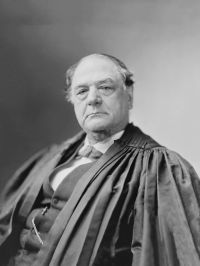
Portrait of Noah Haynes Swayne Noah Haynes Swayne Butz v. City of Muscatine — Opinion of the Court

It leaves no room for doubt or construction. Nothing can be more simple and direct than the terms in which the levy of a sufficient tax is enjoined. The extent of the necessity is the only limitation, express or implied, in the code of the amount to be levied. We cannot interpolate a restriction by importing it from another act which has no necessary relation to the class of cases for which the code intended to provide. When the judgment is recovered the duty arises, and it can be satisfied only by paying the debt, interest, and costs, in the manner prescribed.
Source: Wikisource

Portrait of Noah Haynes Swayne Noah Haynes Swayne Butz v. City of Muscatine — Opinion of the Court

Whenever that action is voluntary, and there is no debt evidenced by a judgment against the city, to be provided for, one per cent. is the maximum of the tax they are authorized to impose. But when a judgment has been recovered, the case is within the regulations of the code. Those provisions are then brought into activity, and operate with full force, until the judgment, interest, and costs are satisfied.
Source: Wikisource

Portrait of Noah Haynes Swayne Noah Haynes Swayne Butz v. City of Muscatine — Opinion of the Court

There is no difficulty as to authority to levy a tax of the requisite amount, whatever it may be. Section 3276 of the code declares, that a failure on the part of the officers of the corporation to perform the duty enjoined, shall render them 'personally responsible for the debt.'
In the construction of a statute, what is clearly implied is as effectual as what is expressed.
Source: Wikisource

Get perspective with Kwize: daily news enlightened by great literature