Summary

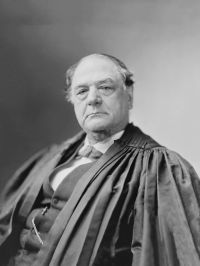
Portrait of Noah Haynes Swayne Noah Haynes Swayne May v. Le Claire — Opinion of the Court

It has been suggested by the counsel for the appellees that if May still has the rights which he claims in respect to the Rosebank farm, he should file a bill to redeem, and having succeeded, should tender a conveyance of the property in performance of his contract with Le Claire instead of prosecuting this suit. That course is unnecessary. Le Claire has already had the ownership, control, and full benefit of the property, and disposed of it as he thought proper. A court of equity can do no more than he did for himself.
Source: Wikisource

Portrait of Noah Haynes Swayne Noah Haynes Swayne May v. Le Claire — Opinion of the Court

The promises of Powers to annul the sale upon the payment of the debt were obviously false, and intended only to deceive and quiet May for the time being. Measures were taken to keep away competing bidders. The amount of the debt was $7400. Dessaint testifies that he bought under an agreement with Powers that he should pay the full amount of the debt; that Powers should procure to be assigned to him May's liability for the difference between the amount of the debt and the amount at which the property should be struck off to him; and that he paid the full amount of the debt to Powers.
Source: Wikisource

Portrait of Noah Haynes Swayne Noah Haynes Swayne May v. Le Claire — Opinion of the Court

Upon the execution of the contract between May and Le Claire, Le Claire became in equity the owner of the farm. The effect of the element of fraud in his subsequent conduct is, that he must be regarded as constructively the trustee and agent of May in removing the incumbrances and acquiring the ownership and beneficial control of the property. Hence his estate is entitled to be credited with his advances and interest instead of the aggregate of the debts extinguished, and interest on that amount.
Source: Wikisource

Get perspective with Kwize: daily news enlightened by great literature