Summary

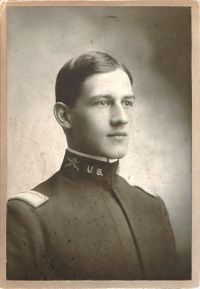
Portrait of Parker Hitt Parker Hitt Manual for the Solution of Military Ciphers

In other words, the average man, when he sits down to evolve a cipher, has nothing to improve upon; he invents and there is no one to tell him that his invention is, in principle, hundreds of years old. The ciphers of the Abbé Tritheme, 1499, are the basis of most of the modern substitution ciphers.
In view of these facts, no message should be considered indecipherable. Very short messages are often very difficult and may easily be entirely beyond the possibility of analysis and solution, but it is surprising what can be done, at times, with a message of only a few words.
Source: Gutenberg

Portrait of Parker Hitt Parker Hitt Manual for the Solution of Military Ciphers

If the whole of a telegraphic or radio message is in cipher, it is highly probable that the preamble, “place from,” etc., are in an operators’ cipher and are distinct from the body of the message. As these operators’ ciphers are necessarily simple, an attempt should always be made to discover, by methods of analysis to be set forth later, the exact extent of the operator’s cipher and then to decipher the parts of the messages enciphered with it.
In military messages, we almost invariably find the language of the text to be that of the nation to which the military force belongs.
Source: Gutenberg

Portrait of Parker Hitt Parker Hitt Manual for the Solution of Military Ciphers

After having decided that a cipher belongs to the transposition class, it remains to decide on the variety of cipher used. As, by definition, a transposition cipher consists wholly of characters of the original message, rearranged according to some law, we may, in general, say that such a cipher offers fewer difficulties in solution than a substitution cipher. A transposition cipher is like a picture puzzle
Source: Gutenberg

Get perspective with Kwize: daily news enlightened by great literature