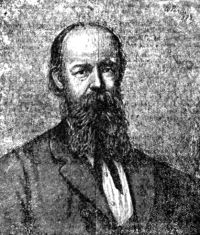
John Eglington Bailey

John Eglington Bailey

Summary

Portrait of John Eglington Bailey John Eglington Bailey 1911 Encyclopædia Britannica (1911)

CRYPTOGRAPHY (from Gr. κρύπτος, hidden, and γράφειν, to write) , or writing in cipher, called also steganography (from Gr. στεγάνη, a covering) , the art of writing in such a way as to be incomprehensible except to those who possess the key to the system employed. The unravelling of the writing is called deciphering. Cryptography having become a distinct art, Bacon (Lord Verulam) classed it (under the name ciphers) as a part of grammar. Secret modes of communication have been in use from the earliest times.
Source: Wikisource

Portrait of John Eglington Bailey John Eglington Bailey 1911 Encyclopædia Britannica (1911)

Schemes of cryptography are endless in their variety. Bacon lays down the following as the “virtues” to be looked for in them:—“that they be not laborious to write and read; that they be impossible to decipher; and, in some cases, that they be without suspicion.” These principles are more or less disregarded by all the modes that have been advanced, including that of Bacon himself, which has been unduly extolled by his admirers as “one of the most ingenious methods of writing in cypher, and the most difficult to be decyphered, of any yet contrived” (Thicknesse, p. 13) .
Source: Wikisource

Portrait of John Eglington Bailey John Eglington Bailey 1911 Encyclopædia Britannica (1911)

For when prosecuting the earl of Somerset in the matter of the poisoning of Overbury, he urged it as an aggravation of the crime that the earl and Overbury “had cyphers and jargons for the king and queen and all the great men,—things seldom used but either by princes and their ambassadors and ministers, or by such as work or practise against or, at least, upon princes.”
Source: Wikisource

Get perspective with Kwize: daily news enlightened by great literature