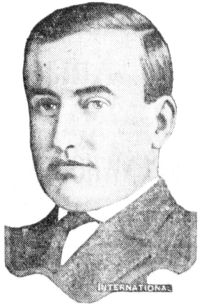
 Payson Jackson Treat,
The American Historical Review
(April 1918)
Payson Jackson Treat,
The American Historical Review
(April 1918)
“ The Shogunate, during the next six years, had to pursue a temporizing policy. Convinced that foreign relations were absolutely necessary and eminently wise, it tried to live up to the treaties on the one hand, and to quiet the dangerous domestic opposition on the other. Hence its position was unenviable. As the opposition became more violent, and the very existence of the Shogunate was in jeopardy, it tried to bring the foreigners to a realization of its problems and to an amelioration of some of the treaty terms which aroused most opposition in the country. ”
