Shogunate

Definition and stakes

Katsuro Hara,  An Introduction to the History of Japan

“ As the well-planned military régime of the Shogunate can be said to have been based on the assumption that war was a far-distant possibility, an imaginary danger, and as at the same time the Shogunate had watched jealously not to stir up daimyo and samurai to so warlike a pitch of self-confidence that they would believe themselves able to cope with the Shogun, there had lain the chief difficulty of sustaining the martial spirit of the nation in full strength, that is to say, of continuing the military régime as it had been at first. ”
Source: Gutenberg

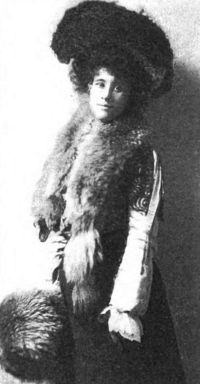
Portrait of Onoto Watanna Onoto Watanna,  The Wooing of Wistaria

“ Eagerly Kommei listened to the Prince’s words—eagerly, and with his eyes fastened upon Mori’s face. Down dropped his head in thought.
Echizen, seizing the opportunity, seconded Mori’s appeal.
“Sire,” he exclaimed, “the shogunate must fall through the foreigner. It cannot rest upon the people. Already is it weakened. Only give the command to expel the foreigner and we will drive him into the seas. He will attack the shogunate, and that once vanquished, thou wilt reign and make peace, perhaps friendship, with these foreigners.”
”
Source: Gutenberg

Katsuro Hara,  An Introduction to the History of Japan

“ The installation of a scion of the Fujiwara and of princes of the blood imperial into the Shogunate facilitated the permeation of the Kyoto culture, which by its nature was too refined to suit congenially men of military profession. The bodyguard of the Shogun began to be chosen from warriors whose demeanor was the most courtier-like, and one of the accomplishments necessary was the ability to compose short poems. ”
Source: Gutenberg

Get perspective with Kwize: daily news enlightened by great literature