Kyushu

Definition and stakes

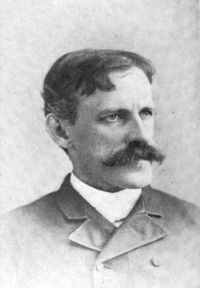
Portrait of F. Brinkley F. Brinkley,  A history of the Japanese people

“ In Kyushu the office of tandai was held by Imagawa Ryoshun, a man ever memorable in Japanese history as the author of the precept that military prowess without education is worse than useless. Ryoshun had been selected for service in Kyushu by the great shitsuji of Muromachi, Hosokawa Yoriyuki, who saw that only by the strongest hands could the turbulent families of the southern island be reduced to order—the Shimazu, the Otomo, the Shoni, and the Kikuchi. ”
Source: Gutenberg

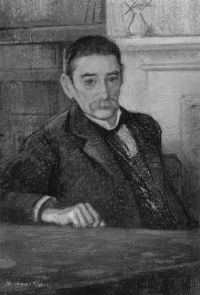
Portrait of Lafcadio Hearn Lafcadio Hearn,  "Out of the East": Reveries and Studies in New Japan

“ It is considered desirable that a young man should be imbued with what is called "the Kyūshū spirit," and should acquire what might be termed the Kyūshū "tone." The students of Kumamoto are said to be the most peculiar students in the Empire by reason of this "tone." I have never been able to learn enough about it to define it well; but it is evidently a something akin to the deportment of the old Kyūshū samurai. Certainly the students sent from Tokyo or Kyoto to Kyūshū have to adapt themselves to a very different milieu. ”
Source: Gutenberg

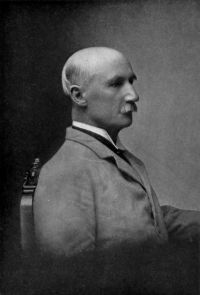
Portrait of F. Brinkley F. Brinkley,  A history of the Japanese people

“ Thereafter, the immigrants touch at a triplet of small islands, described as "in the offing," and thence cross to Kyushu, known at the time as Tsukushi. This large island is described in the Records as having, like Shikoku, one body and four faces, and part of it was inhabited by Kumaso, of whom much is heard in Japanese history. From Kyushu the invaders pass to the islands of Iki and Tsushima, which lie between Kyushu and Korea, and thereafter they sail northward along the coast of the main island of Japan until they reach the island of Sado. ”
Source: Gutenberg

Get perspective with Kwize: daily news enlightened by great literature