“ II.—Let bountiful honor be always paid to the three precious elements of Buddhism, that is, to its priests, its ritual, and its founder. It is the highest religion in the universe, and all people in all generations must pay becoming reverence to its doctrines. Do not harshly censure men's wickedness but teach them faithfully until they yield obedience. Unless men rely upon Buddhism there is no way to convert them from the wrong to the right. III.—To the commands of the Emperor men must be duly obedient. The prince must be looked upon as the heaven and his subjects as the earth. ”
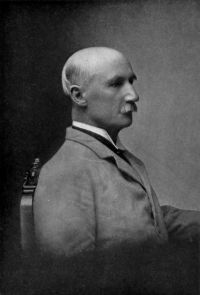
David Murray
Biographical details
David Murray, a historian and writer, is best known for his seminal work Japan, which explores the nation’s complex socio-political evolution through the lens of religious doctrine, imperial authority, and feudal dynamics.
His text examines themes such as the reverent role of Buddhism in governance, the hierarchical relationship between emperor and subjects, and the transformative impact of historical conflicts on national unity. Murray’s analysis, marked by meticulous attention to ritual and power structures, offers profound insights into Japan’s historical trajectory, synthesizing its spiritual foundations with the pragmatism of statecraft.
Quotes by David Murray
“ One undesigned benefit resulted from the Shimonoseki expedition. Just as the bombardment of Kagoshima had taught the daimyō of Satsuma the folly of resisting western armaments, so now the daimyō of Chōshū had learned by an expensive experience the same bitter lesson. For the future these two powerful clans might therefore be counted on, not only to oppose the moribund government of Yedo, but to withstand the folly of trying to expel the foreigners who by treaty with an unauthorized agent had been admitted into the country. ”
“ The people are the foundation of the empire.” His estimate of the social relations is given in the forty-sixth chapter, in which he says: “The married state is the great relation of mankind. One should not live alone after sixteen years of age, but should procure a mediator and perform the ceremony of matrimonial alliance. The same kindred, however, may not intermarry. A family of good descent should be chosen to marry into; for when a line of descendants is prolonged, the foreheads of ancestors expand. All mankind recognize marriage as the first law of nature.” ”
“ Kyōto had suffered so much from fires and warlike attacks, and still more by poverty and neglect, that it was now in a lamentable condition. To have somebody, therefore, with the power and spirit to accomplish his ends, undertake to repair some of the wastes, and put in order what had long run to ruin, was an unexpected and agreeable surprise. The palaces of the emperor and the shōgun were repaired and made suitable as habitations for the heads of the nation. ”
“ If one person is envious of another, the second is sure to be envious of the first. Thus the evils of jealousy never end. If men shall envy each other on account of their talent and wisdom, no single wise man would ever be obtained for government service through a thousand years. What a noble method of governing a state would that be which expelled from its service all wise men! ”
“ The ground on which the opposition to Ieyasu was based was that he was not faithfully performing his duty, as he had promised to the dying Taikō, towards his child and heir. It is not improbable that even at this early day it was seen that Ieyasu proposed to disregard the pretensions of the youthful son of Hideyoshi, in the same way that he in his day had disregarded the claims of the heir of Nobunaga. The rough and warlike times, and the restless and ambitious manners of the feudal lords of these times, made it impossible to entrust the country to the hands of a child. ”
“ When Kyūshū is ours, if you will grant me the revenue of that island for one year, I will prepare ships of war, and purchase provisions, and go over and take Korea. Korea I shall ask you to bestow on me as a reward for my services, and to enable me to make still further conquests; for with Korean troops, aided by your illustrious influence, I intend to bring the whole of China under my sway. When that is effected, the three countries [China, Korea, and Japan] will be one. I shall do it all as easily as a man rolls up a piece of matting and carries it under his arm. ”
“ One state never has more than one prince, and in like manner the subjects cannot have more than one master. The prince is the head of all his dominions and of all his subjects. The officers of government are also the subjects of the prince; and there is no reason why they should dare to lay undue burdens upon others who are subjects of the same prince. ”
“ It is not improbable that when a young man was chosen crown prince he had an establishment of his own assigned to him, and this became his palace which he occupied when he became emperor. When a man died, and especially when an emperor died, it was an ancient custom to abandon his abode. ”
“ As might have been expected, this premature death of Nobunaga—for he was only forty-nine years old—created an intense excitement. The idea of heredity had so fixed a place in men's minds, that the only thought of Nobunaga's friends and retainers was to put forward in his place some one who should be his heir. There were living two sons, both by concubines, viz. Nobuo and Nobutaka, and a grandson, Sambōshi, still a child, who was a son of his son Nobutada, now deceased. Each of these representatives had supporters among the powerful retainers of the dead prince. ”
“ Then the emperor replied, “If you ascend to a high place and look westward, no country is to be seen; there is only the great sea.” And he pushed away the lute upon which he was playing and said, “They are lying deities which have spoken to you.” [pg 075] Then the deity was very angry and spoke again through the empress. “This empire is not a land over which thou art fit to rule. Go thou the one road.” The prime-minister Take-no-uchi then said to the emperor, “I am filled with awe, my heavenly sovereign, at this fearful message. ”
“ It would seem that no great advance can be secured in Japan without the sacrifice of a valuable life. As Ii Kamon-no-kami was murdered in 1860, and as Ōkubo fell by the assassin's hand at the close of the Satsuma rebellion, so now on the very day when the emperor was to promulgate this liberal constitution, Viscount Mori Arinori fell a victim to the fanatical hatred of one who looked with distrust upon the progress which his country was making. ”
“ But the emperor was not equal to so radical a change from the methods which had prevailed for more than a century. He gave great offence by the manner in which he distributed the forfeited fiefs among those who had aided his restoration. To Ashikaga Taka-uji he awarded by far the greatest prize, while to Kusunoki and Nitta, who had in the popular estimation done much more for him, he allotted comparatively small rewards. Among the soldiers, who in the long civil wars had lost the ability to devote themselves to peaceful industries, this disappointment was most conspicuous. ”
“ But the men who surrounded the emperor belonged to a different school, and the emperor himself, although he was still an inexperienced youth, had already begun to breathe the freer air of a new life. The proposition was welcomed, and led to the great change which followed. After discussion and consideration it was determined that the emperor should make his residence not in Ōsaka, which would have been a great and impressive change, but in Yedo, where for two hundred and fifty years the family of Ieyasu had wielded the destinies of the empire. ”
“ VIII.—Too often officers and their colleagues come early to their offices and retire soon; so that the public work accomplished in a single day is small. It is incumbent on them to devote sufficient time to their tasks; if not, then the work of the government cannot be done. IX.—Everything must be faithfully done, because fidelity is the origin of justice. The distinction between good and bad, between success and failure, depends on fidelity. When both prince and subjects are faithful then there are no duties which cannot be accomplished, but when both are unfaithful nothing can be done. ”
“ Beneath these again stood the ordinary fighting men, or common samurai, who were the retainers of the daimyōs and of the shōgun. They were the descendants of the soldiers of the time of Yoritomo, who appointed shiugo to reside with a company of troops in each province, for the purpose of keeping the peace. They had already grown to claim a great superiority over the common people, and Ieyasu encouraged them in this feeling of superciliousness. The people were divided into four classes, arranged in the following order: samurai, farmers, artisans, and merchants. ”
“ The death of the head of the Minamoto only made the tyrant more determined to crush all opposition. Even the ex-Emperor Go-Shirakawa, who was a son-in-law of Kiyomori, but who showed some signs of disapproval, was sent into exile. Several of the sons of Yoshitomo were put to death; but Yoritomo then a boy of thirteen was saved by the interference of the mother-in-law of Kiyomori, and was sent into exile in the province of Izu, and put into the safe-keeping of two faithful Taira men, one of whom Hōjō Tokimasa will be heard of hereafter. ”
“ Whatever was known concerning Japanese history and civilization down to the times of Commodore Perry, came chiefly from the Dutch. And not less than the debt of the rest of the world is that of Japan herself. Although the influence of the government was always exerted against the admission of foreign ideas, not a few of the seeds of western civilization were by them planted in a fertile [pg 311] soil and bore abundant fruit. To Kaempfer and Baron von Siebold particularly we must always look for our knowledge of the Japan of the days of its seclusion. ”
“ On account of the youth of the shōgun he was created regent. He was a man of great resolution and unscrupulous in the measures by which he attempted to carry out the policy to which he was committed. By his enemies he was called the “swaggering prime minister (bakko genro) .” Assured that the foreign treaties could not be abrogated without dangerous collisions with foreign nations, he sought to crush the opposition which assailed them. The daimyō of Mito, who had been the head of the anti-foreign party at Yedo, he compelled to resign and confined him to his private palace in his province. ”
“ The ablest men in the movements which were now in progress were afraid of the traditions of indulgence and effeminacy which attached to the court at Kyōto. In order to restore the government to a true and self-respecting basis, it seemed necessary to cut loose from the centuries of seclusion in which the emperor had remained, and enter upon the work of governing the empire as a serious and solemn task. ”
“ But I have been seized with a mortal disease, and I cannot recover. I am lying in the sweet open fields. I do not care for my life. I only regret that I cannot live to appear before thee and make my report of my expedition.” And he died in the thirty-second year of his age. And they buried him there and built a mausoleum over his remains. The emperor lamented the death of his gallant and immortal son, and made an imperial progress into the regions which he had conquered and pacified. The successor to the Emperor Keikō was known by the canonical name of Seimu. ”
“ The daimyō of Tosa, who was a man of liberal sentiments and of great penetration, addressed a letter to the shōgun in October, 1867, in which he frankly says: “The cause [of our trouble] lies in the fact that the administration proceeds from two centres, causing the empire's eyes and ears to be turned in two different directions. The march of events has brought about a revolution, and the old system can no longer be persevered in. ”
“ Men ought therefore to pay due heed to the orders of the Emperor; if not they will bring ruin on themselves. IV.—Politeness must be the chief rule of conduct for all officers and their colleagues in the court. The first principle governing subjects must be politeness. When superiors are not polite then inferiors will not keep in the right; when inferiors are not polite their conduct degenerates into crime. When both prince and subjects are polite, then social order is never disturbed and the state is kept in a condition of tranquillity. ”
“ VII.—The duty of men in the government must be assigned according to their capacity. When intelligent men take service the applause of the people follows, but when bad men are in office calamities ensue. If wise officers are put on duty the matters of state are well managed, and the community is free from danger and prosperity prevails. Therefore in ancient times the wise king never selected the office for the man, but always selected the man to suit the office. ”
“ Hideyoshi [pg 226] had such confidence in him, and so much doubt about the wisdom of requiring the guardians to wait until his son, a mere child five years old, had grown up to years of responsibility, that he is represented as having said to Ieyasu: “I foresee that there will be great wars after my decease; I know too that there is no one but you who can keep the country quiet. I therefore bequeath the whole country to you, and trust you will expend all your strength in governing it. My son Hideyori is still young. ”
“ They were brought up in an enervating atmosphere and their whole life was spent in arts and employments which, instead of developing in them a spirit of independence and a high ambition and ability to govern well the empire committed to them, led them to devote themselves to pleasures, and to leave to others less fortunate the duty of administering the affairs of government. ”
“ In this way it often fell out that the ablest of the emperors retired from the actual position of reigning emperor in order to free themselves from the restraints of etiquette and from the burden of ennui which held them captive. They assumed the dignity of retired emperors, and often from their retirement wielded a greater influence and exerted a far more active part in the administration of affairs than they ever had been able to do when upon the imperial throne. ”
“ No written language has ever been or is now understood by so many people as the Chinese. The Chinese were a civilized people centuries before the Japanese had, even according to their own uncertain legends, emerged into the light as an empire. If we accept the opinion which seems most reasonable, that the Japanese came over to the Japanese islands from the continent by way of Korea, and belong to the Mongol tribes of central Asia, then we must assume that the Japanese were closely related to a large section of the Chinese. ”
“ The same policy of extermination which Kiyomori had pursued against the Minamoto was now remorselessly enforced by the Minamoto against the Taira. The prisoners who were taken in the battle were executed to the last man. Munemori was taken prisoner and decapitated. Whenever a Taira man, woman, or child was found, death was the inevitable penalty inflicted. Yoritomo stationed his father-in-law Hōjō Tokimasa at Kyōto to search out and eradicate his enemies as well as to supervise the affairs of the government. ”
“ On the coasts of Kyūshū and other islands facing towards the continent piracy also sprang up and flourished apace. It was indeed an era of piracy all over the world. The Portuguese, Spanish, and Dutch traders of this period were almost always ready to turn an honest penny by seizing an unfortunate vessel under the pretence that it was a pirate. The whole coast of China, according to the accounts of Pinto, swarmed with both European and Asiatic craft, which were either traders or pirates, according to circumstances. ”
“ They have been pioneers in a return to a central authority and to the experiment of a representative government, and to the principles of freedom and toleration to which the country is committed. To them Japan owes its ancient as well as its modern system of education. Its old stores of literature, it is true, are not due to them, but surely all its modern development in newspapers, magazines, history, political science, and legal and commercial codes, is to be traced to the adaptability and energy of the old samurai class. ”
“ A little later than the Taira arose another family, the Minamoto, whose equivalent Chinese name was Gen. It sprang from the Emperor Seiwa (a.d. 859-880) . His son Tadazumi became minister of war. Tadazumi had two sons, who were granted the family name of Minamoto; the descendants of one of them, Tsunemoto, being created military vassals. The almost constant wars in which the empire was engaged led to the extension of the military class. From the time now under discussion the military class came to be looked upon as a distinct and separate part of the population. ”
“ Ōkubo Toshimichi, a statesman and patriot of the purest type, had from the beginning resisted the reactionary movements of his clan. At the time of the rebellion he was minister of Home Affairs and put forth all his exertions to suppress it. A baseless slander that he had sent to Satsuma hired assassins to take Saigō's life, had been used by the reckless conspirators to force the rebel leader to an outbreak. ”
“ The Yedo government had by the force of circumstances become practically familiar with the views of the representatives of foreign nations, and had been convinced that the task of expelling foreigners and returning again to the ancient policy of seclusion was far beyond the power of Japan. On the contrary, the court of the emperor was a hot-bed of anti-foreign sentiment in which all the ancient prejudices of the empire naturally flourished, and where the feudal princes who were jealous of the shōgun found a ready element in which to foment difficulties. ”
“ Ieyasu's most radical change in the system of government consisted in the establishment of the seat of his executive department at Yedo. Since a.d. 794 Kyōto had been the capital where successive emperors had reigned, and where Nobunaga and Hideyoshi exercised executive control. Kamakura had been the seat of Yoritomo and his successors. But Ieyasu saw advantages in establishing himself in a new field, to which the traditions of idleness and effeminacy had not attached themselves, and where the associations of his own warlike career would act as a stimulus to his contemporaries and successors. ”
“ The still higher art of painting, which came to Japan from China, rose during the Tokugawa period to the rank which it still holds in the estimation of the artistic world. The best evidence, however, of the civilization of a people is found in their social condition. To learn the true culture of a nation it is necessary to study their education and literature, their laws and system of government, and their morals and religion. ”
“ The ambassadors went home with the conviction that it was Hideyoshi's intention to invade their country. At their instigation the government made what preparations it could, by repairing fortresses, and collecting troops, arms, and provisions. The country was a poor country, and had had the good fortune or the misfortune to remain at peace for two hundred years. The arts of war had been forgotten. They had no generals who could cope with the practised soldiers of Japan. Firearms which had been introduced into the military equipments of Japanese armies were almost unknown in Korea. ”
“ The most important deity in the Pantheon of the Japanese was Amaterasu-ō-mi-kami, who is also called in Chinese characters Tensho Daijin or the Sun Goddess. She appears not only in the myths concerning the origin of the Japanese race, but as the grandmother of the divine prince Hiko-ho-no-ni-nigi, who first came down to rule the Japanese empire. In the Shintō temples at Isé the principal deity worshipped at Gekū is Uké-moche-no-Kami, and the secondary deities Ninigi-no-Mikoto, who came down to found the Japanese empire and was the grandmother of the Emperor Jimmu, and two others. ”
“ So nearly all the prominent participants in the events which had taken place since the first entrance of Buddhism into Japan, had disappeared. In the meantime a religion had taken possession of a field in which it was destined to exert a wide influence and undergo a national development. Along with this religion had come a literature and a culture, which when absorbed into the life of this people gave them the permanent characteristics which we now recognize as the Japanese civilization. ”
“ The Chinese classics were said to have been brought to Japan at an early period, even before the first introduction of Buddhism. But the period was too early and the condition of the country too rude to make the reading and study of the philosophical and political writings of Confucius and Mencius an essential part of the [pg 271] education of the people. The culture which Buddhism brought with it, accompanied with a knowledge of the writing and reading of the Chinese letters, was all that obtained any currency during the disturbed and warlike ages of Japanese history. ”
“ She was a woman of great beauty, and for that reason as well as because she was the mother of the romantic hero Yoshitsuné, she has often been chosen by Japanese artists as the subject of their pictures. Tokiwa and her three children, of whom Yoshitsuné was then an infant at the breast, fled at the breaking out of the storm upon Yoshitomo and the Minamoto clan. They are often represented as wandering through a storm of snow, Yoshitsuné being carried as an infant on the back of his mother, and the other two little ones pattering along with unequal steps at her side. ”
“ But on the whole they were content to fill the office of shōgun in a perfunctory manner, and to leave to subordinates the duty of governing. Japan reached the acme of her ancient greatness during the Tokugawa dynasty. The arts which have given her such a deservedly high rank attained their greatest perfection. Keramics and lacquer, which are her most exquisite arts, achieved a degree of excellence to which we can now only look back with hopeless admiration. Metal-work, as shown in the manufacture of bronze and in the forging and mounting of swords, was scarcely less notable. ”