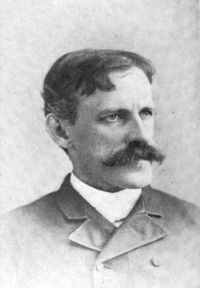
William Elliot Griffis

William Elliot Griffis

Summary

Portrait of William Elliot Griffis William Elliot Griffis Transactions of the Asiatic Society of Japan (1874)

We do not know of any country in the world in which there are so many toy-shops, or so many fairs for the sale of the things which delight children. Not only are the streets of every city abundantly supplied with shops, filled as full as a Christmas stocking with gaudy toys, but in small towns and villages one or more children’s bazaars may be found. The most gorgeous display of all things pleasing to the eye of a Japanese child is found in the courts or streets leading to celebrated temples.
Source: Wikisource

Portrait of William Elliot Griffis William Elliot Griffis Transactions of the Asiatic Society of Japan (1874)

While language, literature, art, religion, the drama, household superstition, etc., furnish us with objects worthy of study, the games and sports of the children deserve our notice. For, as we believe, their amusements reflect the more serious affairs and actions of mature life. They are the foretastes and the prophecies of adult life which children see continually; not always understanding, but ever ready to imitate it. Hence in the toy-shops of Japan one may see the microcosm of Japanese life. In the children’s sports is enacted the miniature drama of the serious life of the parents.
Source: Wikisource

Portrait of William Elliot Griffis William Elliot Griffis Transactions of the Asiatic Society of Japan (1874)

In the first place, we find an almost total absence of the names of great battle-fields, or places of victory, and indeed of nearly everything betokening military glory. Notwithstanding that Japan has been the theatre of conflict for many centuries, so that war may be said to have been the normal, and peace the exceptional condition of its inhabitants, and notwithstanding the invasion, conquest, and long possession of Corea, it does not seem to have been the custom to record the names of battles or of victory in the street-names of the capital, as is the custom in Europe and America.
Source: Wikisource

Get perspective with Kwize: daily news enlightened by great literature