Summary

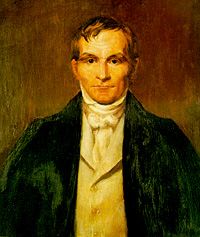
Portrait of Philip Pendleton Barbour Philip Pendleton Barbour United States v. Knight (39 U.S. 301…

Without undertaking to lay down any general rule as applicable to cases of this kind, we feel satisfied, that when, as in this case, a statute which proposes only to regulate the mode of proceeding in suits, does not divest the public of any right, does not violate any principle of public policy; but on the contrary, makes provisions in accordance with the policy which the government has indicated by many acts of previous legislation, to conform to state laws, in giving to persons imprisoned under their execution, the privilege of jail limits
Source: Wikisource

Portrait of Philip Pendleton Barbour Philip Pendleton Barbour United States v. Knight (39 U.S. 301…

Upon this state of facts, it has been contended by the Attorney General, that the imprisoned debtors were guilty of an escape; because they were not within the walls of the jail in the night time; although they always continued both day and night, within the limits of the jail yard. It is said, that the only act of Congress in force, at the date of the bond in question, which entitled the parties to the privileges of jail yards when imprisoned on process issued from any Court of the United States, at the suit of the United States, was the act of the 4th January, 1800
Source: Wikisource

Get perspective with Kwize: daily news enlightened by great literature