Summary

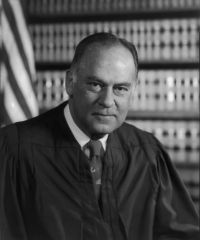
Portrait of Potter Stewart Potter Stewart Durfee v. Duke — Opinion of the Court

For the reasons that follow, we reverse the judgment before us.
The constitutional command of full faith and credit, as implemented by Congress, requires that 'judicial proceedings * * * shall have the same full faith and credit in every court within the United States * * * as they have by law or usage in the courts of such State * * * from which they are taken.' [5] Full faith and credit thus generally requires every State to give to a judgment at least the res judicata effect which the judgment would be accorded in the State which rendered it.
Source: Wikisource

Portrait of Potter Stewart Potter Stewart Durfee v. Duke — Opinion of the Court

It is argued that an exception to this rule of jurisdictional finality should be made with respect to cases involving real property because of this Court's emphatic expressions of the doctrine that courts of one State are completely without jurisdiction directly to affect title to land in other States. [14] This argument is wide of the mark. Courts of one State are equally without jurisdiction to dissolve the marriages of those domiciled in other States.
Source: Wikisource

Portrait of Potter Stewart Potter Stewart Durfee v. Duke — Opinion of the Court

After a hearing the court found the issues in favor of the petitioners and ordered that title to the land be quieted in them. The respondent appealed, and the Supreme Court of Nebraska affirmed the judgment after a trial de novo on the record made in the lower court. The State Supreme Court specifically found that the rule of avulsion was applicable, that the land in question was in Nebraska, that the Nebraska courts therefore had jurisdiction of the subject matter of the litigation, and that title to the land was in the petitioners.
Source: Wikisource

Get perspective with Kwize: daily news enlightened by great literature