Summary

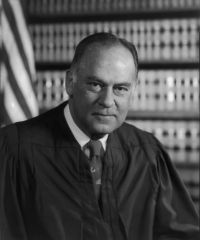
Portrait of Potter Stewart Potter Stewart Kennedy v. Mendoza-Martinez Rusk…

In short, it has been established for almost 50 years that Congress under some circumstances may, without providing for a criminal trial, make expatriation the consequence of the voluntary conduct of a United States citizen, irrespective of the citizen's subjective intention to renounce his nationality, and irrespective too of his awareness that denationalization will be the result of his conduct.
Source: Wikisource

Portrait of Potter Stewart Potter Stewart Kennedy v. Mendoza-Martinez Rusk…

They disassociate themselves entirely from their nation, seeking refuge from their wartime obligations under the aegis of another sovereign. Congress could reasonably have concluded that the existence of such a group, who voluntarily and demonstrably put aside their United States citizenship 'for the duration,' could have an extremely adverse effect upon the morale and thus the war effort not only of the armed forces, but of the millions enlisted in the defense of their nation on the civilian front.
Source: Wikisource

Portrait of Potter Stewart Potter Stewart Kennedy v. Mendoza-Martinez Rusk…

The failure of a person abroad to comply with notices sent by his draft board would obviously be relevant evidence in determining whether that person had gone or remained abroad for the purpose of avoiding military service. But the statute goes much further. It creates a presumption of an expatriating act from failure to comply with 'any provision of any compulsory service laws' by a citizen abroad, regardless of the nature of the violations and regardless of the innocence of his purpose in originally leaving the United States.
Source: Wikisource

Get perspective with Kwize: daily news enlightened by great literature