Summary

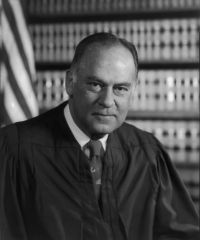
Portrait of Potter Stewart Potter Stewart Ocala Star-Banner Company v. Damron…

He filed the present suit against the Star-Banner in the Circuit Court of Marion County, Florida, alleging that the article was 'libelous per se,' and that it had caused him 'irreparable damages to his reputation, as an individual, public officer, candidate for public office and as a businessman.' He asked $50,000 as compensatory damages and $500,000 as punitive damages. At the trial, the newspaper did not deny that the story was wholly false as to the respondent, and explained the error as the result of a 'mental aberration' by one of the paper's area editors.
Source: Wikisource

Portrait of Potter Stewart Potter Stewart Ocala Star-Banner Company v. Damron…

The Court instructs the Jury that if you believe from the evidence and by the instructions of the Court that the Plaintiff is entitled to recover from the Defendants, then in addition to any compensatory damages, if any, that he may have-may recover, you may, as hereinafter stated, award the Plaintiff punitive damages when malice is shown or implied. * * * The Court instructs the Jury that malice may be implied or inferred where the charge of a felony is imputed to the Plaintiff.
Source: Wikisource

Portrait of Potter Stewart Potter Stewart Ocala Star-Banner Company v. Damron…

In that case we held that a charge of criminal conduct against an official or a candidate, no matter how remote in time or place, is always 'relevant to his fitness for office' for purposes of applying the New York Times rule of knowing falsehood or reckless disregard of the truth. Public discussion about the qualifications of a candidate for elective office presents what is probably the strongest possible case for application of the New York Times rule.
Source: Wikisource

Get perspective with Kwize: daily news enlightened by great literature