Summary

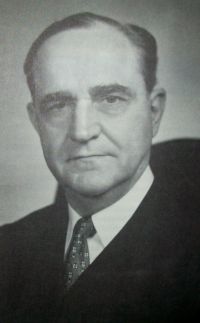
Portrait of Sherman Minton Sherman Minton Barrows v. Jackson — Opinion of the Court

If a state court awards damages for breach of a restrictive covenant, a prospective seller of restricted land will either refuse to sell to non-Caucasians or else will require non-Caucasians to pay a higher price to meet the damages which the seller may incur. Solely because of their race, non-Caucasians will be unable to purchase, own, and enjoy property on the same terms as Caucasians.
Source: Wikisource

Portrait of Sherman Minton Sherman Minton Barrows v. Jackson — Opinion of the Court

When, however, the parties cease to rely upon voluntary action to carry out the covenant and the State is asked to step in and give its sanction to the enforcement of the covenant, the first question that arises is whether a court's awarding damages constitutes state action under the Fourteenth Amendment. To compel respondent to respond in damages would be for the State to punish her for her failure to perform her covenant to continue to discriminate against non-Caucasians in the use of her property.
Source: Wikisource

Portrait of Sherman Minton Sherman Minton Barrows v. Jackson — Opinion of the Court

In other unique situations which have arisen in the past, broad constitutional policy has led the Court to proceed without regard to its usual rule. In Pierce v. Society of Sisters, 268 U.S. 510, 45 S.Ct. 571, 69 L.Ed. 1070, a state statute required all parents (with certain immaterial exceptions) to send their children to public schools. A private and a parochial school brought suit to enjoin enforcement of the act on the ground that it violated the constitutional rights of parents and guardians. No parent or guardian to whom the act applied was a party or before the Court.
Source: Wikisource

Get perspective with Kwize: daily news enlightened by great literature