Summary

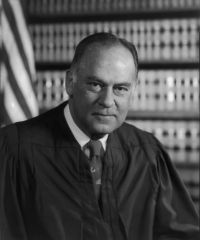
Portrait of Potter Stewart Potter Stewart Procunier v. Atchley — Opinion of the Court

The reason for this approach is obvious. Unless the result of the habeas corpus proceeding turns on disputed issues of historical fact, a rehearing on the issue of the involuntariness of a defendant's incriminating statement would be an exercise in futility, since the applicant for federal habeas would not be entitled to relief even if his allegations of historical fact should be found to be true. Yet the District Court in this case quite evidently failed to make the threshold determination that the respondent would be entitled to relief if his allegations were believed.
Source: Wikisource

Portrait of Potter Stewart Potter Stewart Procunier v. Atchley — Opinion of the Court

In 1959 a jury in a California trial court found the respondent guilty of murdering his wife by firing six bullets into her body at close range. A key prosecution witness at the trial was Ray Travers, an insurance agent. Two days after the respondent's wife was killed, Travers visited the respondent in jail at the latter's request, and the two conversed regarding an insurance policy on the life of the decedent.
Source: Wikisource

Portrait of Potter Stewart Potter Stewart Procunier v. Atchley — Opinion of the Court

Defendant at no time contradicted this testimony or suggested that any of his recorded statements were untrue. Moreover, the recorded conversation demonstrates that Travers referred to the insurance policy to explain why he was asking questions and not as an inducement for any particular answers. The trial court listened to the tape in chambers before ruling on its admissibility. There is therefore no merit in defendant's contention that the recording was admitted without a proper showing that his statements were made voluntarily.
Source: Wikisource

Get perspective with Kwize: daily news enlightened by great literature