Summary

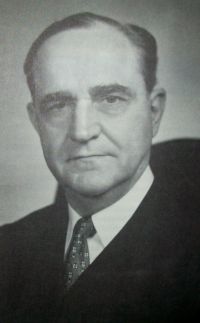
Portrait of Sherman Minton Sherman Minton United State v. Morgan — Dissent

In enacting this comprehensive procedure for collateral attacks on federal criminal judgments, Congress has supplied the remedy to which resort must be had. Since Congress did not see fit in § 2255 to extend the remedy there provided to persons not in federal custody under the judgment attacked, I do not feel free to do so.
It may be said that the federal conviction is still being used against respondent and, therefore, some relief ought to be available. Of course the record of a conviction for a serious crime is often a lifelong handicap.
Source: Wikisource

Portrait of Sherman Minton Sherman Minton United State v. Morgan — Dissent

The Court now holds that the validity of a conviction by a federal court for a federal offense may be inquired into, long after the punishment imposed for such offense has been satisfied, by a 'motion in the nature of a writ of error coram nobis' whenever the federal conviction is taken into account by a state court in imposing sentence for a state crime.
Source: Wikisource

Portrait of Sherman Minton Sherman Minton United State v. Morgan — Dissent

The important principle that means for redressing deprivations of constitutional rights should be available often clashes with the also important principle that at some point a judgment should become final-that litigation must eventually come to an end. These conflicting principles have traditionally been accommodated in federal criminal cases by permitting collateral attack on a judgment only during the time that punishment under the judgment is being imposed, and Congress has so limited the use of proceedings by motion under 28 U.S.C. § 2255, 28 U.S.C.A. § 2255.
Source: Wikisource

Get perspective with Kwize: daily news enlightened by great literature