Summary

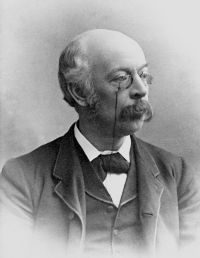
Portrait of Robert Adamson Robert Adamson Dictionary of National Biography… (1885)

Alcuin occupies a distinguished place in the literary history of the middle ages, not on account of his actual writings, but through his position as foremost man of letters in the restoration of teaching under Charlemagne. He was not a profound writer on any subject, nor have his Latin poems much artistic merit, but he was the best representative of a cultured life in a somewhat uncultured time, and his lively, active disposition seems to have harmonised exactly with the functions he was called on to discharge.
Source: Wikisource

Portrait of Robert Adamson Robert Adamson Dictionary of National Biography… (1885)

For within almost two years from the time of receiving Clement's mandate, Bacon, in the 'Opus Tertium,' refers to the 'Opus Majus' as already sent off, and also to a subsequent writing, the 'Opus Secundum,' or 'Opus Minus,' in which an abridgment of the larger work had been given, with a special treatment of some essential subjects omitted either by design or by pressure of circumstances.
Source: Wikisource

Portrait of Robert Adamson Robert Adamson Dictionary of National Biography… (1885)

ALFRED, surnamed Anglicus and also Philosophus, an English writer, who probably flourished towards the close of the twelfth and beginning of the thirteenth centuries. Considerable obscurity rests over his career and works. Roger Bacon, in his reference to translators of Aristotle, mentions one Alfred, an Englishman (R. B. Op. Ined., by Brewer, 1859, p. 471) , and speaks of him as a contemporary. The work in which the reference is made doubtless was not prior to 1270.
Source: Wikisource

Get perspective with Kwize: daily news enlightened by great literature