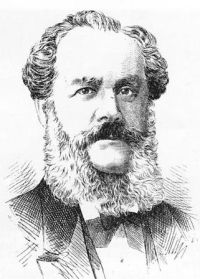
Thaddeus Davids

Thaddeus Davids

Summary

Portrait of Thaddeus Davids Thaddeus Davids The History of Ink (1860)

Though its great original and continual employment is in writing, it must be remembered that it is also largely used in the delineation of objects by artists. Ink and paint are mutually convertible to each others uses, but are yet so distinct in character and objects, that no one regards the words as synonymous, and no precise definition is needed to teach the distinction between them. As, for instance, in pen-and-ink drawings and sketches, the ink serves the purpose of paint.
Source: Wikisource

Portrait of Thaddeus Davids Thaddeus Davids The History of Ink (1860)

It is but too provable that many manuscripts, the characters of which were entirely formed of the more ancient carbonic ink have been entirely destroyed, the letters having been washed off completely, and by the same simple means as the writing of a school-boy on a slate; whilst the parchment still remains in our libraries, and is covered with more modern compositions which have sacrilegiously and too successfully usurped the place of more ancient and more valuable material.
Source: Wikisource

Portrait of Thaddeus Davids Thaddeus Davids The History of Ink (1860)

The word encaustum connects, in a very interesting and instructive manner, both with the history and the chemistry or manufacture of our modern inks, and is a satisfactory, demonstration of the utility of such etymological researches as those in which we have been here indulging.
The one great distinction between the ancient and the modern inks is this: The old inks were paints; the writing inks now in use by all nations (excepting those of Southern Asia) are dyes. That is the whole difference.
It would be well to give a definition or limitation of the words "Ancient" and "Modern."
Source: Wikisource

Get perspective with Kwize: daily news enlightened by great literature