Summary

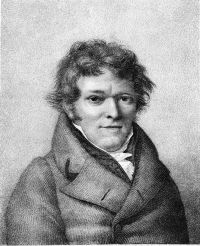
Portrait of Alois Senefelder Alois Senefelder The Invention of Lithography

Thus I came to use these stones as the principal means for making my countless experiments, whose happy result has been to elevate stone-printing to an art by itself.
Having stated the process and the character of this form of printing, it remains only to say a few words about its value.
With every new invention there arises the question if it is useful, and if so, in how far, for science, arts, and industry. Therefore all who have no sufficient knowledge of lithography, will ask justly: What is its value? What advantages does it give that are not to be found in any other forms of printing?
Source: Gutenberg

Portrait of Alois Senefelder Alois Senefelder The Invention of Lithography

It is time to urge contemporaries once more to declare anything known to them that is in contradiction of this history, so that a critical history of stone-printing may be produced, with a chronicle of what was done in the early years of the art, how and by whom, so that we may learn if several minds had the idea simultaneously, and thus to do justice to all.
Source: Gutenberg

Portrait of Alois Senefelder Alois Senefelder The Invention of Lithography

The best way to ink-in an intaglio design is to rub it in at first with a somewhat firm color that however, contains enough gum, then to wipe it a bit, and after that to rub gently to and fro over the stone under gentle pressure, with a rag containing a less heavy color. A firmer color does not adhere well to the more delicate lines, or, at least, is hard to print; but by applying it first, the printing of the wider and deeper lines is facilitated, while the succeeding rubbing with softer color brings out the perfection of the finer lines.
Source: Gutenberg

Get perspective with Kwize: daily news enlightened by great literature