Summary

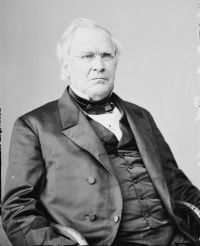
Portrait of Robert Cooper Grier Robert Cooper Grier Hallett v. Collins — Opinion of the Court

He persuades them to release their title to William Kitchen for the sum of one thousand dollars each; a sum which, to young men just out of their apprenticeship, poor, and ignorant of their rights, would appear large and attractive. Kennedy is well acquainted with the nature and value of their claim; they are wholly ignorant of it. He informs them that their claim is worthless, but that kitchen was willing to give them this sum for the sake of peace and quieting his title.
Source: Wikisource

Portrait of Robert Cooper Grier Robert Cooper Grier Hallett v. Collins — Opinion of the Court

But as the conveyance is a deed poll, in the nature of a quit-claim and release, without a warranty, and with a covenant for further assurance to Inerarity, or the heirs of Collins, it most probably would not. But for the purposes of this case the question is wholly immaterial. Inerarity, as a creditor of the estate of Collins, would have a right to demand the payment of his debt, before he should make a transfer to the heirs. But whether as holder of the legal or equitable estate in trust, his beneficial interest amounted to no more.
Source: Wikisource

Portrait of Robert Cooper Grier Robert Cooper Grier Hallett v. Collins — Opinion of the Court

The equitable title of Collins, of which the deed to Inerarity contained a new acknowledgment, had its origin at least as far back as 1806. So that, even if we could bring ourselves to believe that Joshua Kennedy, whether acting for Kitchen or himself, had purchased and paid his money without notice of the title of Collins's heirs, it would not enable him to defeat their claim. The legal title first became vested in W. E. Kennedy in 1822, and passed by his deed of 1824 to Joshua Kennedy, with full knowledge of the trust.
Source: Wikisource

Get perspective with Kwize: daily news enlightened by great literature