Summary

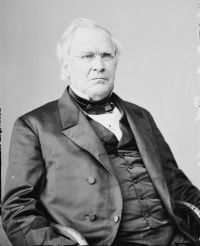
Portrait of Robert Cooper Grier Robert Cooper Grier McCormick v. Talcott — Opinion of the Court

But if the invention claimed be itself but an improvement on a known machine by a mere change of form or combination of parts, the patentee cannot treat another as an infringer who has improved the original machine by use of a different form or combination performing the same functions. The inventor of the first improvement cannot invoke the doctrine of equivalents to suppress all other improvements which are not mere colorable invasions of the first.
Source: Wikisource

Portrait of Robert Cooper Grier Robert Cooper Grier McCormick v. Talcott — Opinion of the Court

In such a condition of the wheat, any process by which a portion of the crop should be torn apart from portions with which it was intertwined, would prove highly detrimental, inasmuch as it would necessarily increase the irregularity in the position of the wheat not cut, and standing outside of the regular track of the machine; and, by violently and rapidly rending apart the tangled straw, would shatter and waste the grain in each division, creating thereby a serious diminution in the yield or product.
Source: Wikisource

Portrait of Robert Cooper Grier Robert Cooper Grier McCormick v. Talcott — Opinion of the Court

When grain, in addition to being inclined, is also entangled, the divider not only separates and raises the stalks, but also tends to disentangle them. The lower face of a divider also performs the function of a shoe or runner, to prevent the cutting apparatus from digging into the earth, when, by any accidental movement of the machine, it would otherwise do so. The divider also performs the function of limiting or regulating the width of the swath, by raising up and turning inwards those stalks of grain which, from their inclination outwards, would otherwise escape the action of the cutter
Source: Wikisource

Get perspective with Kwize: daily news enlightened by great literature