Summary

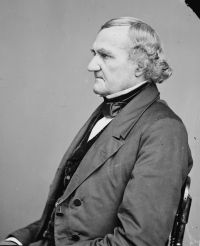
Portrait of John Catron John Catron Brooks v. Fiske — Opinion of the Court

It is alleged that a planing machine, patented to Norcross, and used by the defendants, was substantially in its combination, and in the result it produced, the same as that assigned to the complainants, for a district in which the defendant's machine was used; that the complainant's patent was the elder, and that the use of Norcross's machine was an infringement of that invented by William Woodworth.
Source: Wikisource

Portrait of John Catron John Catron Brooks v. Fiske — Opinion of the Court

To infringe, Norcross must use all the parts of Woodworth's combination. 1. The use of rollers to keep the board firmly to the bed, and prevent it from being drawn into the cutters and torn to pieces, and to press out the warps, is the principal claim to invention. Norcross uses no such pressure rollers, nor can they be employed in his machine to such purpose.
But it is insisted that the section of the bed plate in Norcross's machine, over which the unplaned board passes before it reaches the cutter, is equivalent to the pressure roller of Woodworth
Source: Wikisource

Portrait of John Catron John Catron Brooks v. Fiske — Opinion of the Court

If either of these sets of witnesses be correct the Hill machine contained the plaintiff's pressure roller, and as it had also a bed piece and rotary cutter, it would follow that it had the plaintiff's combination. Such a construction, therefore, cannot be maintained. The truth is, that after the Hill machine, it was only left to Woodworth to make some new arrangement of the three elements, that is, some new mode of combination. Woodworth's invention may be regarded as an improvement upon Hill's.
Source: Wikisource

Get perspective with Kwize: daily news enlightened by great literature