Summary

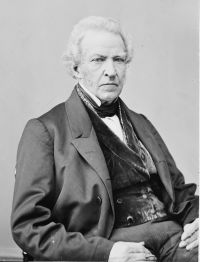
Portrait of James Moore Wayne James Moore Wayne Wilson v. Simpson — Opinion of the Court

Has the patentee a more equitable right to force the disuse of the machine entirely, on account of the inoperativeness of a part of it, than the purchaser has to repair, who has, in the whole of it, a right of use? And what harm is done to the patentee in the use of his right of invention, when the repair and replacement of a partial injury are confined to the machine which the purchaser has bought?
Source: Wikisource

Portrait of James Moore Wayne James Moore Wayne Wilson v. Simpson — Opinion of the Court

In either case, repairing partial injuries, whether they occur from accident or from wear and tear, is only refitting a machine for use. And it is no more than that, thought it shall be a replacement of an essential part of a combination. It is the use of the whole of that which a purchaser buys, when the patentee sells to him a machine; and when he repairs the damages which may be done to it, it is no more than the exercise of that right of care which every one may use to give duration to that which he owns, or has a right to use as a whole.
Source: Wikisource

Portrait of James Moore Wayne James Moore Wayne Wilson v. Simpson — Opinion of the Court

That the thing patented is the thing invented, we have before shown to be the doctrine of the court in Wilson v. Rousseau and Easton.
Woodworth did not invent the frame, the cog-wheels, and shafts, and other elementary parts, which, when put together, constitute what is known as the Woodworth planing-machine. These are the mere appliances,-the mere elements of machinery,-which are as free for every man to use as the air he breathes.
Source: Wikisource

Get perspective with Kwize: daily news enlightened by great literature