Summary

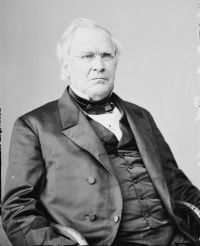
Portrait of Robert Cooper Grier Robert Cooper Grier Corning v. Burden — Opinion of the Court

If to claim a 'method' or mode of operation in the abstract, explained in the description of certain machinery, be a claim for a machine, as was adjudged in Blanchard v. Sprague, is not the claim of preparing puddlers' balls, by the operation of certain machinery, much more a claim of a machine? In other words, is the claim of a particular result before known, from the operation of a machine claimed to be new, any thing else than a claim for the peculiar construction of the machine itself, by which that result is effected?
Source: Wikisource

Portrait of Robert Cooper Grier Robert Cooper Grier Corning v. Burden — Opinion of the Court

A new process is usually the result of discovery; a machine, of invention. The arts of tanning, dyeing, making water-proof cloth, vulcanizing India rubber, smelting ores, and numerous others, are usually carried on by processes, as distinguished from machines. One may discover a new and useful improvement in the process of tanning, dyeing, &c., irrespective of any particular form of machinery or mechanical device. And another may invent a labor-saving machine by which this operation or process may be performed, and each may be entitled to his patent.
Source: Wikisource

Portrait of Robert Cooper Grier Robert Cooper Grier Corning v. Burden — Opinion of the Court

In conclusion, the court in this case should have held that the plaintiff's patent was for a machine. And on the question of novelty the court should have left it to the jury as a question of fact, to find upon the testimony whether the plaintiff's machine was the same in its principle or modus operandi as the milling, button, or shot machines. And on the question of infringement, the court should have left it to the jury, upon the testimony, to find whether the defendants' machine was the same in its distinctive character or principle as the plaintiff's.
Source: Wikisource

Get perspective with Kwize: daily news enlightened by great literature