Summary

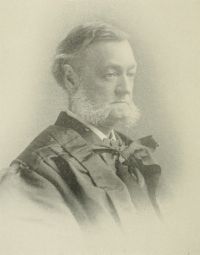
Portrait of George Shiras, Jr. George Shiras, Jr. Coupe v. Royer — Opinion of the Court

You are not to consider whether one machine makes more trouble than the other, whether one makes work more uniform than the other, and more desirable in the market, whether one is better able to perform the work, whether one does it with a less amount of power, whether it is easier in one to load or unload than in the other, whether the machine is more under the control of the operator in one case than in the other, or whether the crib in one case is more adjustable than in the other.
Source: Wikisource

Portrait of George Shiras, Jr. George Shiras, Jr. Coupe v. Royer — Opinion of the Court

It is true, no doubt, that the defendant Coupe has testified that there is no advantage in the use of this patented mechanism; that it is not worth anything to him who uses it. His testimony is that it is not worth anything to anybody, and cannot be made to make leather, according to his understanding of it, according to his testimony. Of course, if that be true, it not only reduces the damages to nothing, it is not only conclusive that there should not be any damages at all, but that there should be a verdict for the defendants.
Source: Wikisource

Portrait of George Shiras, Jr. George Shiras, Jr. Coupe v. Royer — Opinion of the Court

A patented machine that will not do what it is intended to do could not sustain an action against one who was shown to use a successful and operative machine.
While we think that the learned judge was right in regarding the case as one that depended on a construction of the plaintiffs' patent and on undisputed evidence of the character of the defendants' machine, we yet think that he erred in his definition of the plaintiffs' patent, and in withdrawing the question of infringement from the jury.
Source: Wikisource

Get perspective with Kwize: daily news enlightened by great literature