Summary

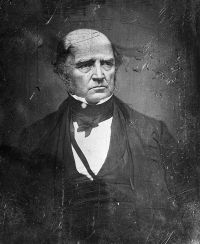
Portrait of Levi Woodbury Levi Woodbury Hogg v. Emerson (52 U.S. 587)…

That, if the second drawing which has been exhibited in evidence is to be regarded as a part of the plaintiff's patent, and to be referred to to help out the specification, there must be a conformity between them. If they are substantially at variance, and incongruous, and inconsistent with each other, it is a fatal defect in the patent, which alone is sufficient to prevent the recovery of the plaintiff.
Source: Wikisource

Portrait of Levi Woodbury Levi Woodbury Hogg v. Emerson (52 U.S. 587)…

It is, that the improvement thus described is for more than one invention, and that one set of letters patent for more than one invention is not tolerated by law.
But grant that such is the result when two or more inventions are entirely separate and independent,-though this is doubtful on principle,-yet it is well settled in the cases formerly cited, that a patent for more than one invention is not void, if they are connected in their design and operation.
Source: Wikisource

Portrait of Levi Woodbury Levi Woodbury Hogg v. Emerson (52 U.S. 587)…

But that law being repealed, and the damages now left open for each case, the judge correctly added, that a fair ground existed for a mitigation below that amount, if the maker of the machine appeared in truth to be ignorant of the existence of the patent right, and did not intend any infringement. That would not, however, furnish a reason, as was insisted by the plaintiffs in error, for allowing no damages when making the machine to be used, and not, as in some cases, merely for a model, or for fancy, or philosophical illustration.
Source: Wikisource

Get perspective with Kwize: daily news enlightened by great literature