Summary

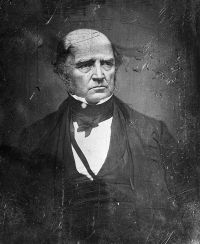
Portrait of Levi Woodbury Levi Woodbury Hogg v. Emerson (47 U.S. 437)…

In no other way can the subject-matter of an invention be distinctly brought out, so as to warn the public against undesigned infringements. If several machines can be mixed up in one specification, and several improvements on each, and then patented in the name of one of those machines, it is respectfully, but earnestly, insisted, that the patent-office cannot fail to become the source of more oppression and outrage than will be long tolerated by a people who are masters of their own institutions.
Source: Wikisource

Portrait of Levi Woodbury Levi Woodbury Hogg v. Emerson (47 U.S. 437)…

Would it not be monstrous to allow a patentee to recover damages for an alleged infringement made at a time when, by his solemn oath, he declares that the defendant was not notified of the character of his invention?-nay, more, when he swears, that, at the time of the alleged infringement, the only recorded notice of his invention, sworn to by himself, was imperfect, incorrect, and insufficient?
Source: Wikisource

Portrait of Levi Woodbury Levi Woodbury Hogg v. Emerson (47 U.S. 437)…

Before an inventor shall receive a patent, he is required, 'in case of any machine, fully to explain the principle and the several modes in which he has contemplated the application of that principle or character, by which it may be distinguished from other inventions, and shall particularly specify and point out the particular improvement or combination which he claims as his own invention or discovery.' The requisition of the English law is similar in this respect.
Source: Wikisource

Get perspective with Kwize: daily news enlightened by great literature