Summary

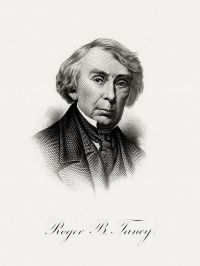
Portrait of Roger B. Taney Roger B. Taney Bloomer v. McQuewan — Opinion of the Court

The 5th amendment to the Constitution of the United States declares, that no person shall be deprived of life, liberty, or property, without due process of law.
The right to construct and use these planing machines, had been purchased and paid for without any limitation as to the time for which they were to be used. They were the property of the respondents. Their only value consists in their use. And a special act of Congress, passed afterwards, depriving the appellees of the right to use them, certainly could not be regarded as due process of law.
Source: Wikisource

Portrait of Roger B. Taney Roger B. Taney Bloomer v. McQuewan — Opinion of the Court

The franchise which the patent grants, consists altogether in the right to exclude every one from making, using, or vending the thing patented, without the permission of the patentee. This is all that he obtains by the patent. And when he sells the exclusive privilege of making or vending it for use in a particular place, the purchaser buys a portion of the franchise which the patent confers. He obtains a share in the monopoly, and that monopoly is derived from, and exercised under, the protection of the United States.
Source: Wikisource

Get perspective with Kwize: daily news enlightened by great literature