Summary

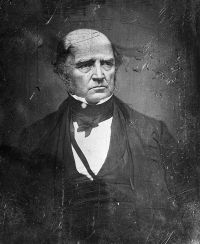
Portrait of Levi Woodbury Levi Woodbury Wilson v. Rousseau — Dissent

It is true, that some 'renewals' are not 'extensions,' in the sense of prolonging the term of the patent, that is, when an old patent is surrendered and a new one taken out, or a renewal made for the rest of the term,-while all extensions prolong the term. But still 'renewals' are as often used for a prolongation of the term, or for a new term, as extensions are, and in this very section, 'to renew and extend' is used as if synonymous, and this in sound analogy to the use of the word renewal on several other subjects.
Source: Wikisource

Portrait of Levi Woodbury Levi Woodbury Wilson v. Rousseau — Dissent

Looking, then, to the beneficient design of the eighteenth section, to enforce the Constitution, by advancing science and the arts, and protecting useful inventions, through the security for a longer term to men of genius of a property in their own labors, in cases where they had not been already remunerated for their time and expenses, I cannot but fear that the construction given by the majority of the court will prove most unfortunate.
Source: Wikisource

Portrait of Levi Woodbury Levi Woodbury Wilson v. Rousseau — Dissent

No authority is conferred to bestow exclusive rights on others than 'authors and inventers' themselves.
Hence a patent could not probably be granted to an assignee, nor an extension bestowed on one, independent of the assent or agreement of the patentee, or of its inuring to his benefit, without raising grave doubts as to its being a violatin of the Constitution. But so far as inventers have expressly agreed that assignees shall be interested in their patents, or in the extensions of them, the latter may well be protected
Source: Wikisource

Get perspective with Kwize: daily news enlightened by great literature