Summary

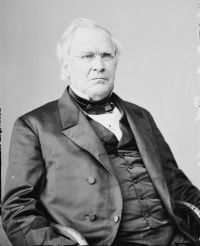
Portrait of Robert Cooper Grier Robert Cooper Grier Richardson v. City of Boston (65 U.S. 188…

There was nothing, in the opinion of this court, which should subject it to the misconstruction of having decided that a 'town way' for boats and vessels could be laid out on the high seas, or of imputing to the town officers such an obliquity of understanding as the assumption of such a power would argue; on the contrary, the court decided that the public officers had no such power; but that the city, after it reclaimed the land to high-water mark, might continue Summer street as a highway on land, for a nuisance, to which the plaintiff might sustain an action
Source: Wikisource

Portrait of Robert Cooper Grier Robert Cooper Grier Richardson v. City of Boston (65 U.S. 188…

The plaintiff is the owner of two wharves, called Bull's wharf and Price's wharf, running from high-water to low-water mark. The space between these two wharves belongs to the city of Boston, being situated at the foot of Summer street; and as it was but thirty feet wide, it became, by the mere accident of its position, a very convenient dock, or slip, for plaintiff, so long as the city did not see fit to reclaim their land.
Source: Wikisource

Portrait of Robert Cooper Grier Robert Cooper Grier Richardson v. City of Boston (65 U.S. 188…

Formerly, the drains and sewers which ran under Summer street discharged at the end of that street at high-water mark; but, as the city increased, this discharge of drainage became pestilential, and a nuisance to the neighborhood. To remedy this evil, the city was compelled to extend their drains out to low-water mark, and this is the nuisance complained of in this and the other suits.
Source: Wikisource

Get perspective with Kwize: daily news enlightened by great literature