Summary

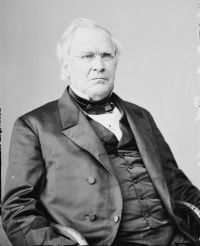
Portrait of Robert Cooper Grier Robert Cooper Grier City of Boston v. Lecraw — Opinion of the Court

The people of Boston, who owned this land as their common and private property, acted through a corporation, whose corporate grants and licenses are matters of record. Their own use of their own property for their own benefit cannot be called a dedication of it to any other public of wider extent. Whether it was called 'town dock' or 'public dock,' (which were used as synonymous terms,) it would furnish no ground to presume that they had parted with their right to govern and use it in the manner most beneficial to the people or public of the town or city.
Source: Wikisource

Portrait of Robert Cooper Grier Robert Cooper Grier City of Boston v. Lecraw — Opinion of the Court

The public enjoyed this highway of nature by a title reaching far before the advent of the Pilgrims, and paramount to any grant to them or by them, but by the law the enjoyment of this public right was made defeasible by the owner of the land. Till he reclaimed his land, the public needed no grant or dedication by him, in order to their enjoyment of the right of navigation over it. The owner was not bound to exercise his right within a given time, or forfeit it. A man cannot lose the title to his lands by leaving them in their natural state without improvement, or forfeit them by non-user.
Source: Wikisource

Portrait of Robert Cooper Grier Robert Cooper Grier City of Boston v. Lecraw — Opinion of the Court

To instruct the jury that certain facts are not 'sufficient' evidence on which to presume a dedication, without informing them what facts would constitute sufficient evidence for that purpose, is devolving on them the decision of both law and fact, and permitting them to dispose of men's property at their discretion, by presuming grants without a particle of evidence to authorize such presumption.
Source: Wikisource

Get perspective with Kwize: daily news enlightened by great literature