Summary

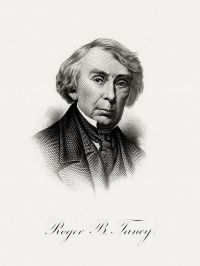
Portrait of Roger B. Taney Roger B. Taney Hortsman v. Henshaw — Opinion of the Court

And if he has received the money from the acceptor, and the forgery is afterwards discovered, he will be compelled to repay it.
The reason of the rule is obvious. A forged indorsement cannot transfer any interest in the bill, and the holder therefore has no right to demand the money. If the bill is dishonored by the drawee, the drawer is not responsible. And if the drawee pays it to a person not authorized to receive the money, he cannot claim credit for it in his account with the drawer.
Source: Wikisource

Portrait of Roger B. Taney Roger B. Taney Hortsman v. Henshaw — Opinion of the Court

The insolvency of the drawer can make no difference in the rights and legal liabilities of the parties.
The English cases most analogous to this are those in which the names of the drawers or payees were fictitious, and the indorsement written by the maker of the bill. And in such cases it has been held that the acceptor is liable, although, as the payees were fictitious persons, their handwriting of course could not be proved by the holder. 10 Barn.
Source: Wikisource

Portrait of Roger B. Taney Roger B. Taney Hortsman v. Henshaw — Opinion of the Court

They transmitted it to their correspondent in London, and upon presentation it was accepted by the drawee, and duly paid at maturity. The payees and indorsees all resided in Boston, where the bill was drawn and negotiated.
It turned out that the indorsement of the payees was forged, by whom does not appear; and a few months after the bill was paid, the drawers failed and became insolvent. The drawee, having discovered the forgery, brought this action against the defendants in error to recover back the money he had paid them.
Source: Wikisource

Get perspective with Kwize: daily news enlightened by great literature