Summary

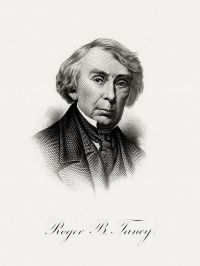
Portrait of Roger B. Taney Roger B. Taney Kennett v. Chambers — Opinion of the Court

In revolutions, there must be a time when an old government ends and a new one begins. And when a new one begins, it must embrace a certain portion of the earth of which it has possession. Now with regard to this provision of the Treaty, I respectfully insist, that, by a revolution, a portion of what was before Mexico, ceased to be any part of the possessions or territory of Mexico, and became the possessions and territory of the new government; and that this provision in the treaty could no longer bind the United States to regard the revolted territory as any part of the Mexican territory.
Source: Wikisource

Portrait of Roger B. Taney Roger B. Taney Kennett v. Chambers — Opinion of the Court

The intercourse of this country with foreign nations, and its policy in regard to them, are placed by the Constitution of the United States in the hands of the government, and its decisions upon these subjects are obligatory upon every citizen of the Union. He is bound to be at war with the nation against which the war-making power has declared war, and equally bound to commit no act of hostility against a nation with which the government is in amity and friendship.
Source: Wikisource

Portrait of Roger B. Taney Roger B. Taney Kennett v. Chambers — Opinion of the Court

And I respectfully insist, that, while it is the policy of the United States government, to preserve her neutrality between belligerent nations, there is nothing in this law to prevent one of her citizens entering into a contract with a citizen of another independent government for the purchase of land lying in that government, even though it be recited in the contract, that it is the intention of the person selling his lands to use the money he receives for them in raising and equipping volunteers to maintain and advance the independence of his country.
Source: Wikisource

Get perspective with Kwize: daily news enlightened by great literature