Summary

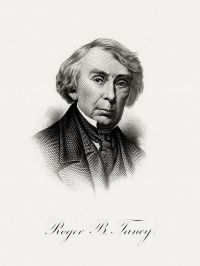
Portrait of Roger B. Taney Roger B. Taney Philadelphia, Wilmington and Baltimore Railroad Company v…

The charter of the Baltimore and Port Deposit Railroad declared that the property in this road when constructed should be vested in the company, and that the shares of the company should be deemed and considered as personal property. But there is no provision in the law exempting its stocks or its property, real or personal, from taxation. And certainly there is no reason why the property of a corporation should be presumed to be exempted, or should not bear its share of the necessary public burdens, as well as the property of individuals.
Source: Wikisource

Portrait of Roger B. Taney Roger B. Taney Philadelphia, Wilmington and Baltimore Railroad Company v…

The Wilmington and Susquehanna Railroad Company was partly in Maryland and partly in Delaware, and owed its existence to a separate charter. And the law which authorizes these two companies to unite themselves with the plaintiff in error declares that this new corporation, that is, the Philadelphia, Wilmington, and Baltimore Railroad Company, shall be entitled within this state to all the powers and privileges and advantages at that time belonging to these two companies. It grants it nothing more.
Source: Wikisource

Portrait of Roger B. Taney Roger B. Taney Philadelphia, Wilmington and Baltimore Railroad Company v…

Five directors shall constitute a quorum for the transaction of business. The directors may, if they shall deem it advisable, appoint an executive committee, consisting of six members, from the states of Pennsylvania, Delaware, and Maryland, for such time, and for the performance of such duties, as any resolutions of the directors, or any by-law, may prescribed and assign; and the president, or vice-president, and any two members of said committee, shall constitute a quorum thereof.
Source: Wikisource

Get perspective with Kwize: daily news enlightened by great literature