Quorum

Definition and stakes

Henry M. Robert,  Pocket Manual of Rules of Order for Deliberative Assemblies (1876)

“ A Quorum of an assembly is such a number as is competent to transact its business. Unless there is a special rule on the subject, the quorum of every assembly is a majority of all the members of the assembly. But whenever a society has a permanent existence it is usual to adopt a much smaller number, the quorum being often less than one-twentieth of its members; this becomes a necessity in most large societies, where only a small fraction of the members are ever present at a meeting. ”
Source: Wikisource

Andrew W. Young,  The government class book

“ Quorum is the Latin of the English words, of whom, and has strangely come to signify the number or portion of any body of men who have power to act for the whole. Thus with reference to a legislative body consisting of a certain number of members, instead of saying, A majority quorum shall have power to act; or, A majority of whom shall have power to act, our constitutions generally say, A majority shall constitute a quorum to do business. In some states, more than a bare majority is required for a quorum. ”
Source: Gutenberg

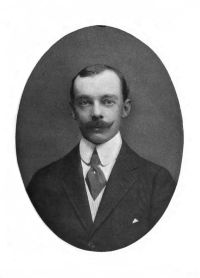
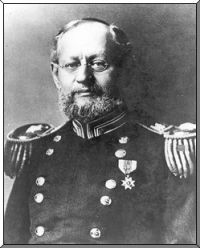
Portrait of Henry Martyn Robert Henry Martyn Robert,  Roberts Rules of Order Revised 4th Ed (1915)

“ Where such societies have no by-law establishing a quorum, the quorum consists of those who attend the meeting, provided it is either a stated meeting or one that has been properly called.
In all ordinary societies the by-laws should provide for a quorum as large as can be depended upon for being present at all meetings when the weather is not exceptionally bad. In such an assembly the chairman should not take the chair until a quorum is present, or there is no prospect of there being a quorum.
”
Source: Wikisource

Get perspective with Kwize: daily news enlightened by great literature