Summary

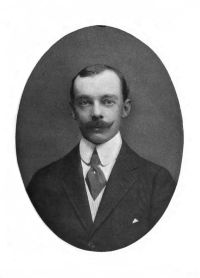
Portrait of Harry Graham Harry Graham The Mother of Parliaments

Though outwardly inflexible, a modern member must be prepared to bow to the wishes of his party; and in his ripe and perfect memory there should be room for the names and faces of his constituents and their wives. He must be patient when he has failed for the hundredth time to "catch the Speaker's eye"; he must be docile when the Whip urges him to vote in favour of a motion with which he disagrees fundamentally; and if he be of a thin-skinned disposition or of a delicate constitution, the labours of the House of Commons may soon prove too much for him.
Source: Gutenberg

Portrait of Harry Graham Harry Graham The Mother of Parliaments

If matters were left to the decision of the Commons, it is clear that everything would probably be brought within the scope of privilege; if to courts of law, all privilege would possibly be abolished. Some thought the former alternative was the least to be feared. "While men are but men," said Lord Jeffrey, "we must be at the mercy of a fallible and irresponsible despotism at best; and if we have to choose, as in an open question, few would hesitate to say that they would rather have the House of Commons for a despot than the courts of law."
Source: Gutenberg

Portrait of Harry Graham Harry Graham The Mother of Parliaments

And though his constituents remain loyal and his seat secure, there arrives a day when he begins to weary of the slavery of parliamentary life, of the drudgery of a political career. Like Macaulay, he may at length come to define politics as a pursuit from which the most that those who are engaged in it can expect is that by relinquishing liberal studies and social pleasures, by passing nights without sleep and summers without one glimpse of the beauty of nature, they may attain "that laborious, that invidious, that closely watched slavery which is mocked with the name of power."
Source: Gutenberg

Get perspective with Kwize: daily news enlightened by great literature