Deliberative assembly

Definition and stakes

Henry M. Robert,  Robert's Rules of Order

“ The Right of an Assembly to Eject any one from its place of meeting. Every deliberative assembly has the right to decide who may be present during its session, and when the assembly, either by a rule or by a vote, decides that a certain person shall not remain in the room, it is the duty of the chairman to enforce the rule or order, using whatever force is necessary to eject the party. ”
Source: Gutenberg

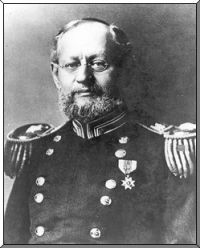
Portrait of Henry Martyn Robert Henry Martyn Robert,  Roberts Rules of Order Revised 4th Ed (1915)

“ If there was no provision for protecting the assembly, a minority of two members could be constantly raising questions of order and appealing from every decision of the chair, and calling for a division on every vote, even when it was nearly unanimous, and moving to lay motions on the table, and to adjourn, and offering amendments that are simply frivolous or absurd. By taking advantage of parliamentary forms and methods a small minority could practically stop the business of a deliberative assembly having short sessions, if there was no provision for such contingency. ”
Source: Wikisource

Orson B. Felt,  Felt’s Parliamentary Procedure (1902)

“ It is therefore necessary that any deliberative assembly, to command respect, and proceed with as little discord as possible, should adopt certain rules, and conduct its business with a regard for certain forms and rules of procedure in order that the will of the majority may be carried out with due regard to the rights of the minority, and that the will of the assembly be ascertained with fair dealing. ”
Source: Wikisource

Get perspective with Kwize: daily news enlightened by great literature