Summary

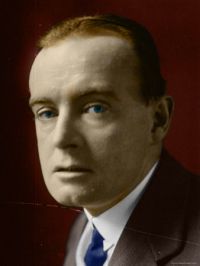
Portrait of Saki Saki The Toys of Peace and Other Papers… (1919)

Bertie had opened the door; he had on his hat and overcoat.
“I’m going for a doctor to come and see if anything’s the matter with you. Of course it was all a hoax, but no person in his right mind could have believed all that rubbish about murder and suicide and jewels. You’ve been making enough noise to bring the house down for the last hour or two.”
“But what was I to think of those letters?” whimpered Mrs. Heasant.
“I should have known what to think of them,” said Bertie; “if you choose to excite yourself over other people’s correspondence it’s your own fault.
Source: Wikisource

Portrait of Saki Saki The Toys of Peace and Other Papers… (1919)

The more private they are intended to be the more acute is the interest they arouse. She would have opened this particular letter in any case; the fact that it was marked “private,” and diffused a delicate but penetrating aroma merely caused her to open it with headlong haste rather than matter-of-course deliberation. The harvest of sensation that rewarded her was beyond all expectations.
Bertie, carissimo,” it began, “I wonder if you will have the nerve to do it: it will take some nerve, too. Don’t forget the jewels.
Source: Wikisource

Portrait of Saki Saki The Toys of Peace and Other Papers… (1919)

Clotilde’s letter betrays everything.”
“Does it betray who she is?” asked Bertie; “I’ve heard so much about her, I should like to know something about her home-life. Seriously, if you go on like this I shall fetch a doctor; I’ve often enough been preached at about nothing, but I’ve never had an imaginary harem dragged into the discussion.”
“Are these letters imaginary?” screamed Mrs. Heasant; “what about the jewels, and Dagmar, and the theory of suicide?”
Source: Wikisource

Get perspective with Kwize: daily news enlightened by great literature