Summary

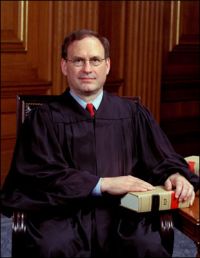
Portrait of Samuel Alito Samuel Alito Police v. City of Newark — Opinion of the Court

In other words, if this is the real reason for the distinction that is drawn between medical and religious exemptions, we have before us a policy the very purpose of which is to suppress manifestations of the religious diversity that the First Amendment safeguards. Before sanctioning such a policy, we would require a far more substantial showing than the Department has made in this case. We thus conclude that the Department's policy cannot survive any degree of heightened scrutiny and thus cannot be sustained.
Source: Wikisource

Portrait of Samuel Alito Samuel Alito Police v. City of Newark — Opinion of the Court

Conceivably, the Department may think that permitting officers to wear beards for religious reasons would present a greater threat to the sense of uniformity that it wishes to foster because the difference that this practice highlights -- namely, a difference in religious belief and practice -- is not superficial (like the presence of pseudo folliculitis barbae) and thus may cause divisions in the ranks and among the public. (There is no doubt that religious differences have been a cause of dissension throughout much of human history.)
Source: Wikisource

Portrait of Samuel Alito Samuel Alito Police v. City of Newark — Opinion of the Court

However, the medical exemption raises concern because it indicates that the Department has made a value judgment that secular (i.e., medical) motivations for wearing a beard are important enough to overcome its general interest in uniformity but that religious motivations are not. As discussed above, when the government makes a value judgment in favor of secular motivations, but not religious motivations, the government's actions must survive heightened scrutiny.
Source: Wikisource

Get perspective with Kwize: daily news enlightened by great literature