Summary

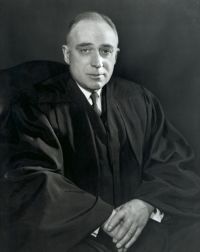
Portrait of John Marshall Harlan II John Marshall Harlan II Walz v. Tax Commission of the City of New York…

Whether the present exemption entails that degree of involvement with government that presents a threat of fragmentation along religious lines involves, for me, a more subtle question than deciding simply whether neutrality has been violated. Unlike the subsidy that my Brother Douglas foresees as the next step down the road, tax exemptions to nonprofit organizations are an institution in themselves, so much so that they are, as THE CHIEF JUSTICE points out, expected and accepted as a matter of course.
Source: Wikisource

Portrait of John Marshall Harlan II John Marshall Harlan II Walz v. Tax Commission of the City of New York…

In the context of an exemption so sweeping as the one before us here its administration need not entangle government in difficult classifications of what is or is not religious, for any organization-although not religious in a customary sense-would qualify under the pervasive rubric of a group dedicated to the moral and cultural improvement of men. Obviously the more discriminating and complicated the basis of classification for an exemption-even a neutral one-the greater the potential for state involvement in evaluating the character of the organizations.
Source: Wikisource

Portrait of John Marshall Harlan II John Marshall Harlan II Walz v. Tax Commission of the City of New York…

As long as the breadth of exemption includes groups that pursue cultural, moral, or spiritual improvement in multifarious secular ways, including, I would suppose, groups whose avowed tenets may be antitheological, atheistic, or agnostic, I can see no lack of neutrality in extending the benefit of the exemption to organized religious groups.
Source: Wikisource

Get perspective with Kwize: daily news enlightened by great literature